3 months ago·3 min read
Food or Food Product? What Ingredient Labels Are Really Telling You
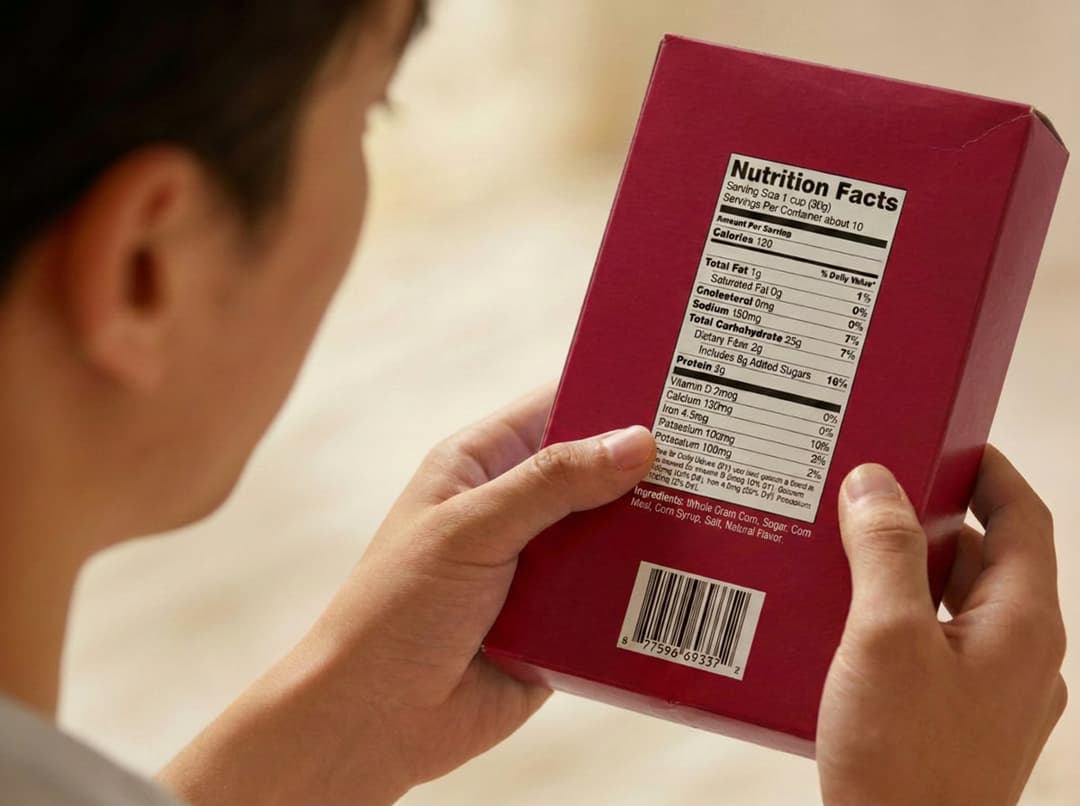
With health consciousness rising, more and more so-called “healthy products” are available in the store. Labeled as low fat, organic, sugar free, or rich in fiber, but do these labels truly reflect what’s inside? If we cannot pronounce half of the ingredients, should we eat it?
The simple answer is: not really. Let’s discuss why.
Food vs Food Products
There is a difference between food and food products. For example; An apple has one ingredient: apple. A salmon fillet has one ingredient: Salmon. Nature doesn’t need a label.
When you pick up a highly processed item and find a long list of ingredients, you’ve crossed the line from food to food product. These products aren’t designed purely for nutrition, they’re engineered for shelf stability. The unrecognizable chemicals are often there to make cheap raw materials taste delicious, or keep a baked good soft on the shelf for months.
Real food rots while fake food stays fresh thanks to the preservatives our bodies don’t recognize how to break down. Shall we really eat any “food” that even microbes wouldn’t eat? Think about it!
The Truth About “Natural Flavors”
Second, one of the biggest loopholes in food labeling is "natural flavors." It sounds innocent, right? In reality, a single "natural flavor" can contain over 100 different chemicals. It’s a proprietary mixture that mimics a taste but doesn't contain any actual whole food.
How Processed Additives Affect the Gut
Our gut microbiome is the epicenter of our immune system. These trillions of bacteria evolved to digest whole foods. Emerging research suggests that these unpronounceable additives can strip away the protective mucus lining of the gut, causing inflammation and disrupting the balance of good versus bad bacteria. Your body simply doesn't have the biological blueprint to process D&C Red #40 or Yellow #5. They’re recognized as toxins, which triggers a low-grade inflammatory response.
How to Read Ingredient Labels Smarter
So, does it mean you should avoid all over the shelf food? No. It's not a black or might matter. Try to eat as whole food as possible, and this should represent most of what we eat.
When it comes to processed food, read the label. How many ingredients does it contain? How many of them are unrecognizable? If the product has 3 or more ingredients that you don’t recognize, put it back. If it has one ingredients that is considered a red flag like artificial dyes ( red 40 or yellow 5) or industrial lubricant ( like polysorbale 80) then it’s enough to make you avoid the product completely.
Final Thoughts
To summarize, don’t just count the unrecognizable words, but weigh their purpose. If they're there to nourish or safely preserve, be lenient. If they're there to trick your senses into eating something nutritionally dead, that's a hard "no," even if it's just one.


